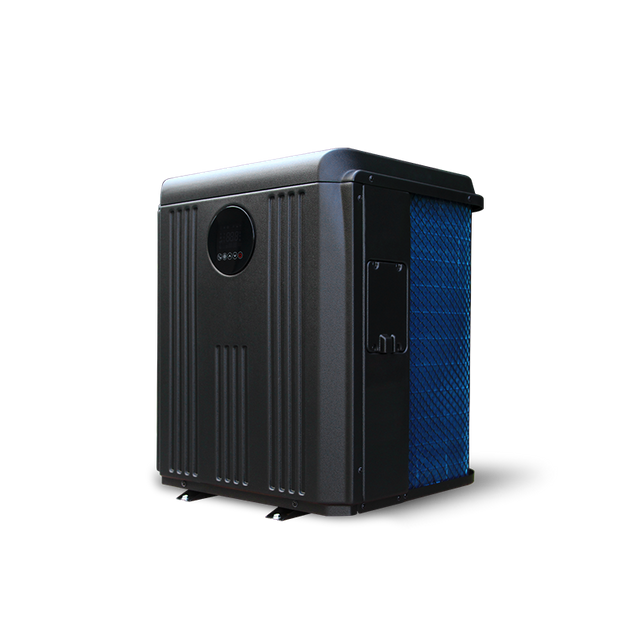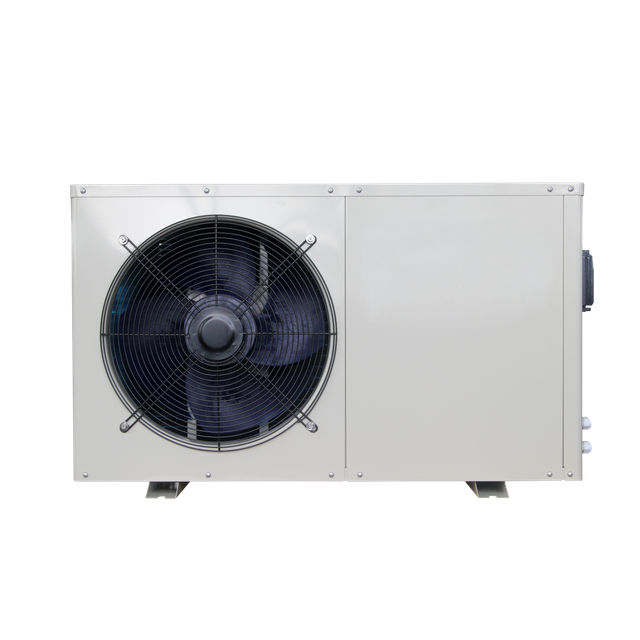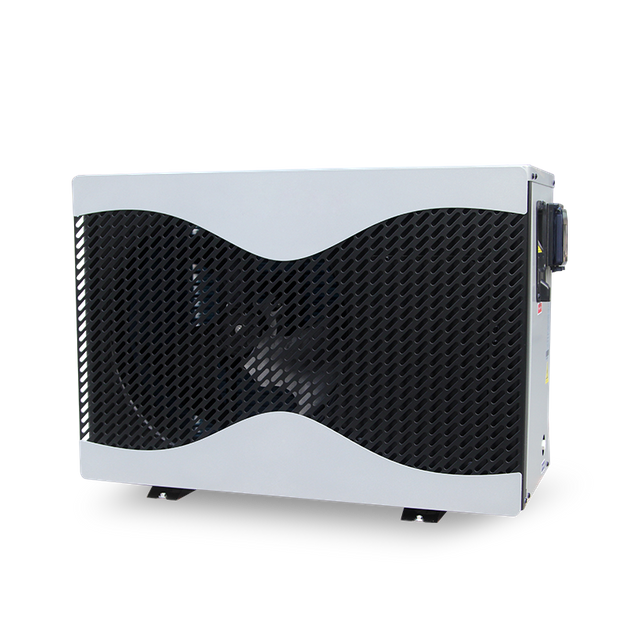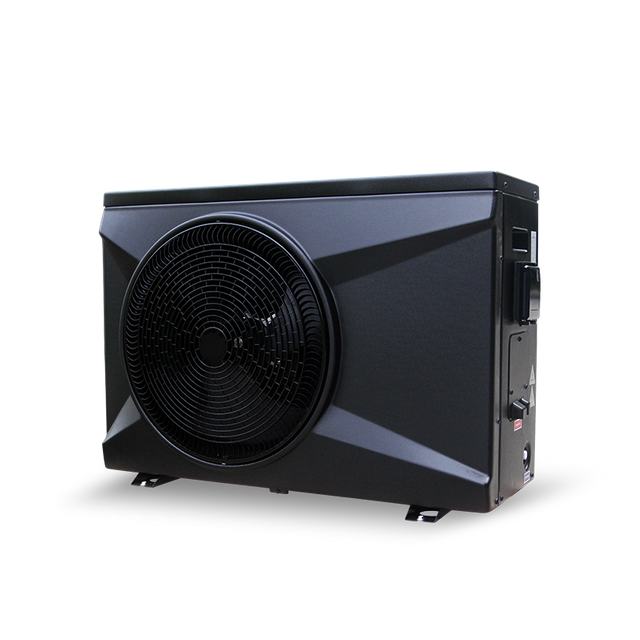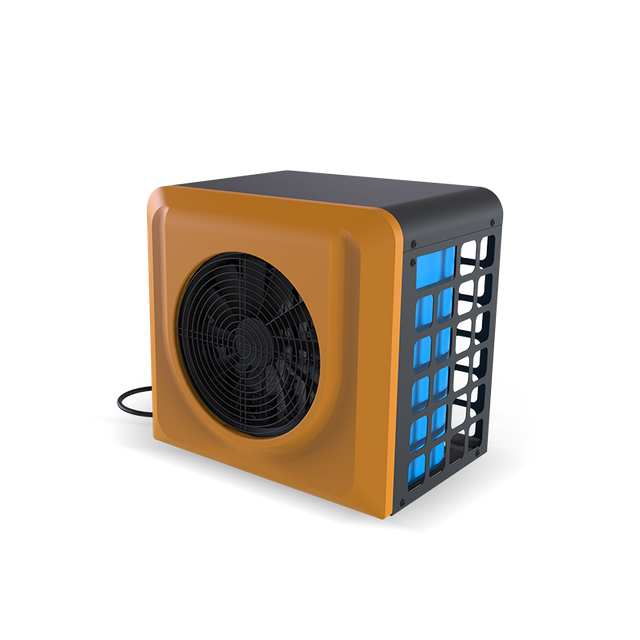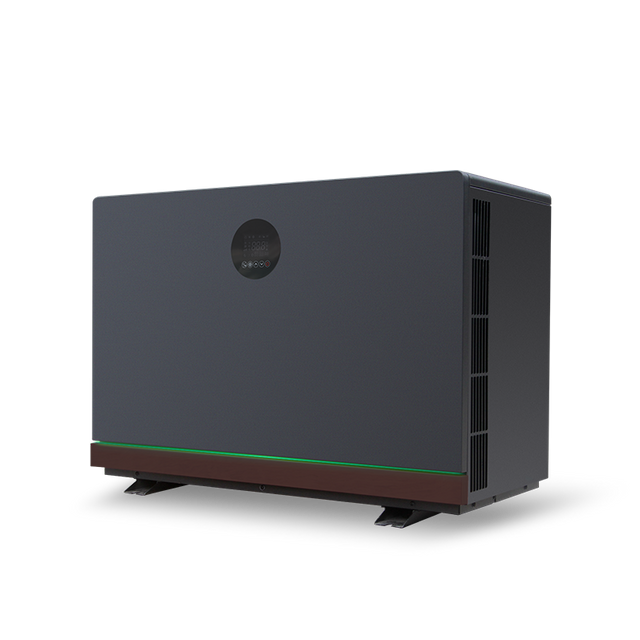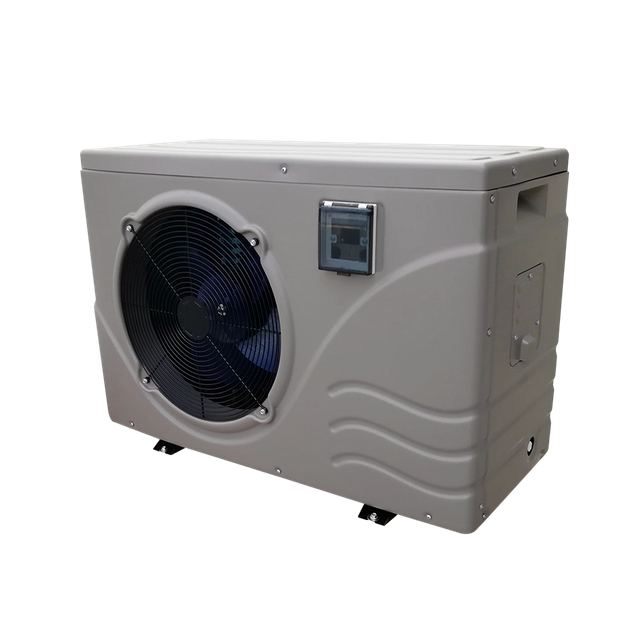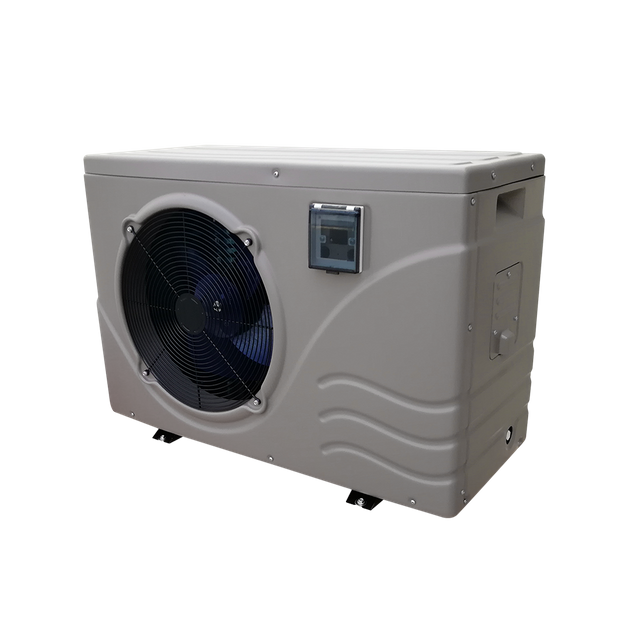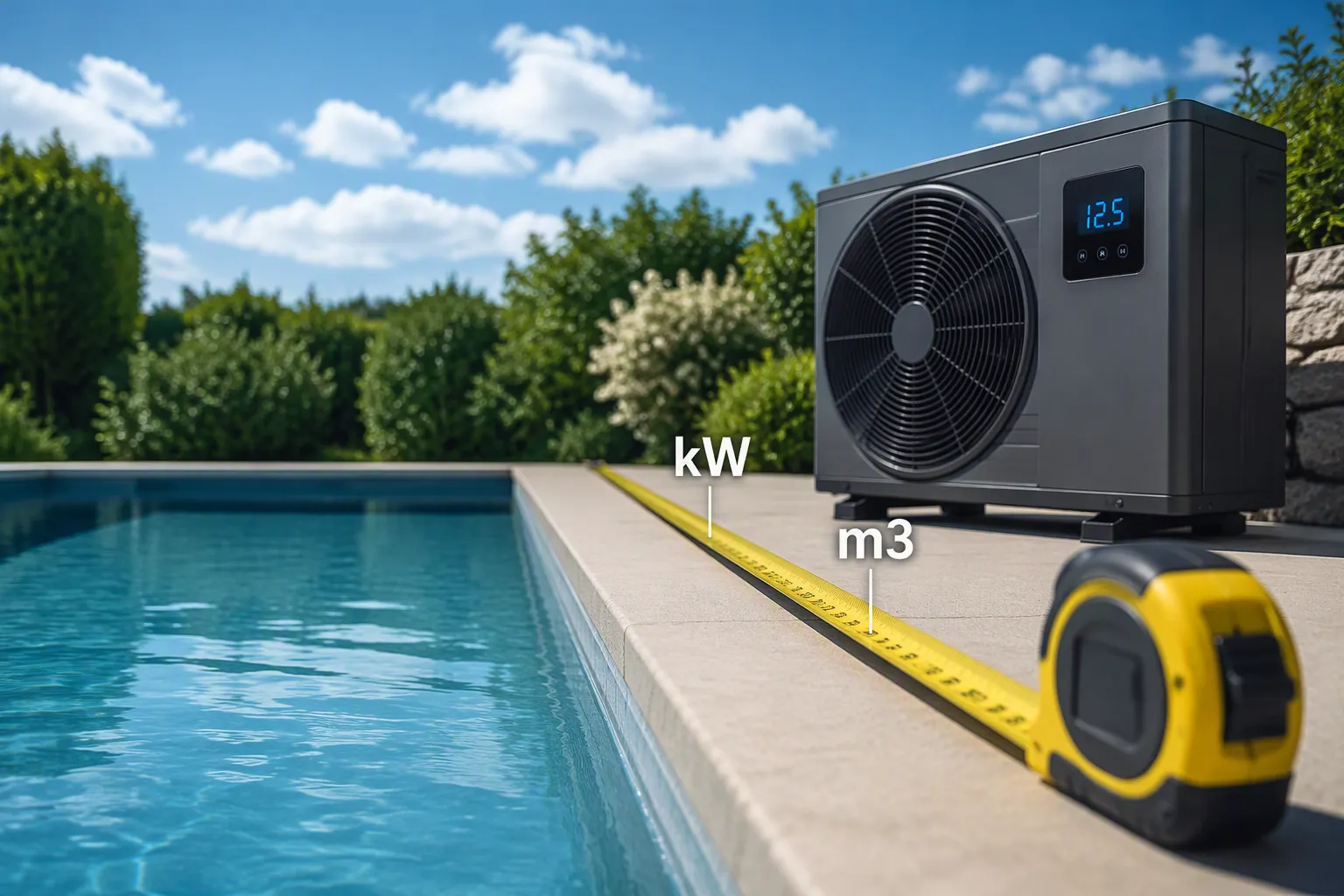
The standard rule for pool heat pump sizing is 0.31 kW per m³ of water for summer-only heating. Extended seasons or colder climates require 0.39 kW per m³. Industry data confirms this: summer heating equals 4 BTU per gallon (0.31 kW/m³), while extended-season heating reaches 5 BTU per gallon (0.39 kW/m³).
Pool Volume (m³) | Minimum Heat Pump Power (kW) |
|---|---|
30 – 40 | 9 |
40 – 60 | 12 |
50 – 80 | 16 |
For accurate pool heat pump sizing, match your pool size to the appropriate range. A 30 m³ pool needs at least 9 kW. A 50 m³ pool requires 16 kW minimum. This pool heat pump sizing guide gives you a starting point for heating your swimming pool efficiently.
Use 0.2 to 0.35 kW per m³ for summer-only heating.
Raise the ratio to 0.4 to 0.5 kW per m³ for extended seasons or cold climates.
A thermal cover reduces heat loss, so you can use a smaller heat pump.
Proper sizing saves energy and extends equipment life.
Higher COP values mean better efficiency and lower operating costs.
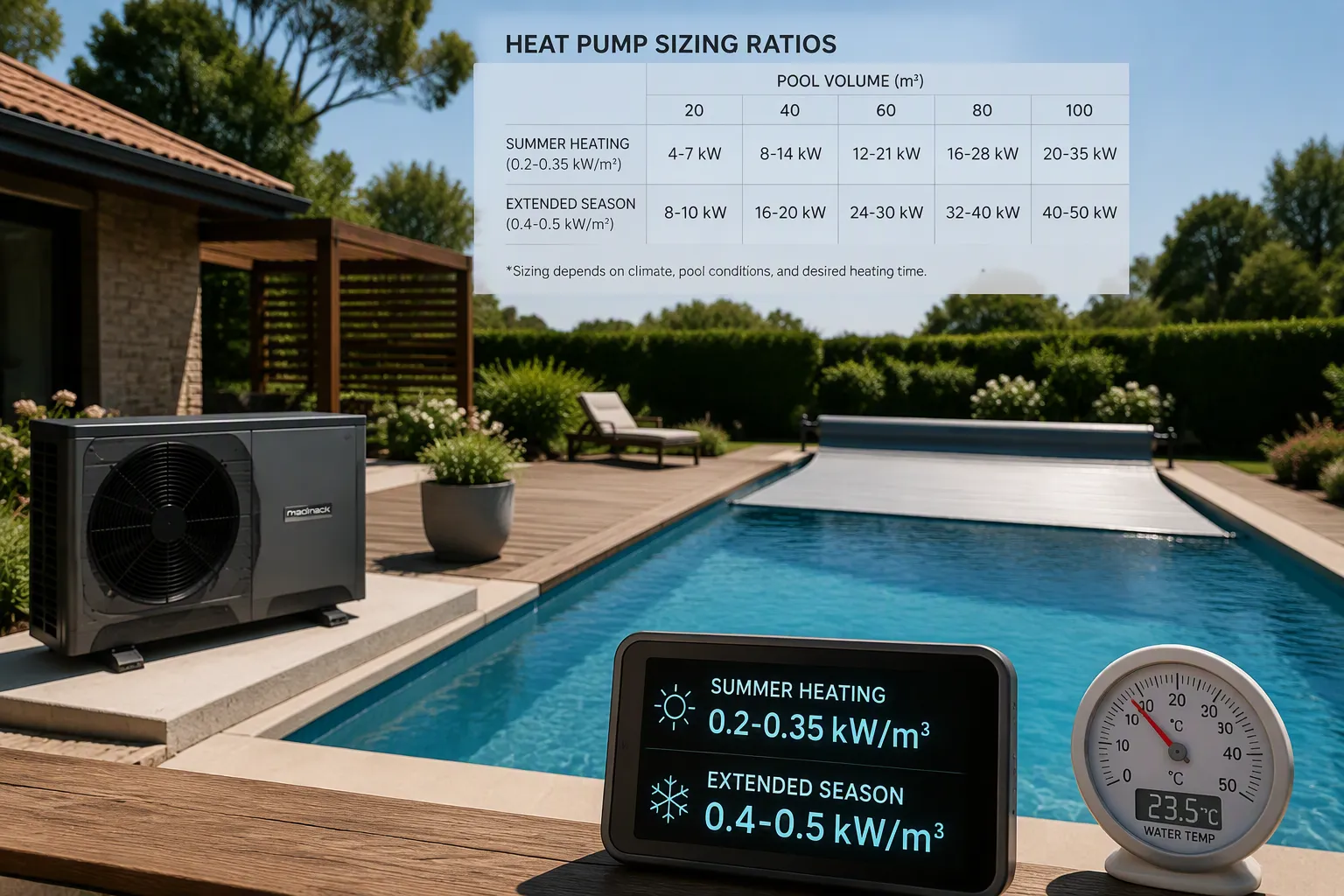
You need a clear starting point before you compare equipment. The standard baseline ratio for summer-only heating with a thermal cover sits at 0.31 kW per m³ of water. This range works well for most residential pools in moderate climates. You can apply this ratio directly to your pool volume to find the minimum output you need.
The imperial conversion gives you another way to check your math. Summer heating requires about 4 BTU per gallon of water. Extended-season heating pushes that figure to 5 BTU per gallon. You can convert these values to metric if you prefer working in kW. The table below shows the relationship clearly.
Condition | BTU per gallon |
|---|---|
Summer heating | 4 BTU/gallon |
Extended‑season heating | 5 BTU/gallon |
For a typical 15×30 ft pool (~17,000 gallons) heated 15°F over 24 hours, the rule of thumb gives roughly 60,000–72,000 BTU/h, which translates to about 3.5–4.2 BTU per gallon.
This example confirms the baseline. A pool of that size falls right inside the expected range. You can trust the 0.31 kW per m³ figure as your primary sizing guideline for basic summer use.
Your situation changes when you want more than three months of swimming. Extended season heating and cold climate conditions demand more power. You should raise your ratio to 0.39 kW per m³. This higher range accounts for greater heat loss through the water surface and cooler ambient air temperatures.
You also need to consider whether you use a thermal cover. An uncovered pool loses heat much faster at night. Wind exposure accelerates that loss even further. If your pool sits in an open area with no windbreak, you should lean toward the upper end of the extended-season range. The same applies if you target a water temperature above 28°C (82°F).
The imperial baseline supports this adjustment. Extended season heating at 5 BTU per gallon aligns with the 0.39 kW per m³ metric range. You can use either system to verify your calculations. Both point to the same conclusion: colder conditions require a larger heat pump output.
Your pool size directly influences the final number. A 40 m³ pool with summer-only needs falls around 12.4 kW. The same pool with extended season heating jumps to 15.6 kW. That difference matters when you compare equipment costs and operating expenses.
You should also factor in your local climate before you finalize any decision. Coastal areas with strong winds need more capacity than sheltered inland locations. Northern regions with cooler nights need more capacity than southern zones. The 0.39 kW per m³ range gives you the flexibility to adjust for these variables.
One more note on the imperial conversion baseline: you can use the conversion factors to cross-check your calculations.
This pool heat pump sizing guide gives you a practical framework. Start with the baseline ratio for your climate. Adjust upward for extended seasons, uncovered pools, or higher target temperatures. The result gives you a reliable range for your pool heat pump sizing. You can then compare specific models within that range to find the best fit for your swimming pool.
Before you can size a system, you need an accurate volume. You calculate volume in cubic meters differently for each shape.
For a rectangular shape with constant depth, use Length × Width × Depth. If it has a shallow end and a deep end, calculate the average depth first. Add the shallow-end depth and the deep-end depth, then divide by 2. For example, if the shallow end is 0.5 m and the deep end is 1 m, the average depth equals 0.75 m. Then multiply length × width × average depth. If the shallow-end area is about the same as the deep-end area, take the depth halfway along the slope.
For a round shape, use π × r² × depth. Pi equals approximately 3.14. Measure the radius in meters, square it, multiply by 3.14, then multiply by the depth.
For freeform shapes, such as kidney or irregular, measure the longest length. Estimate the average width by taking multiple width measurements along the length and averaging them. Multiply length by average width by depth. This gives cubic feet. Multiply by 7.5 to get gallons. Convert gallons to cubic meters using 1 m³ equals 264.172 gallons. Alternatively, divide cubic feet by 35.315. Note that freeform values are approximations with 5 to 10 percent variance.
Shape | Formula (in gallons) | Conversion to m³ |
|---|---|---|
Rectangular (constant depth) | Length (ft) × Width (ft) × Depth (ft) × 7.5 | Volume (gal) ÷ 264.172 |
Round (circular) | π × r² (ft) × Depth (ft) × 7.5 (π ≈ 3.14) | Same conversion |
Freeform (kidney/irregular) | Longest length (ft) × avg width (ft) × depth (ft) × 7.5 | Same conversion; note 5-10% variance |
Once you know your pool volume, you can calculate the thermal load. Water has a specific thermal capacity of 1.16 Wh per liter per degree Celsius. This means it takes 1.16 Wh to raise 1 liter by 1°C. For a larger volume, 11.6 kilowatt-hours raises 10 m³ by 1°C. Using the specific heat capacity of water (4.186 kJ per kg per K), the formula kilowatt-hours equals liters multiplied by 4.186 multiplied by ΔT divided by 3600 confirms the same result.
You can calculate the required power using this formula: P = V × 1.16 × ΔT / t. Here, P is power in kW, V is pool volume in cubic meters, ΔT is the desired temperature rise in °C, and t is the heating time in hours.
Use this pool heat pump sizing example to see the math. Consider a 10,000-gallon volume. That equals approximately 37.85 m³. You want to raise the temperature from 60°F to 80°F. That is a rise of about 11.1°C. You want to achieve this in 24 hours. Plug into the formula: P = 37.85 × 1.16 × 11.1 / 24. This equals approximately 20.37 kW before adding a heat-loss buffer.
Add a safety margin for thermal loss through the water surface. A 25% margin is standard. Multiply 20.37 by 1.25 to get approximately 25.46 kilowatts. The required heat pump capacity for this sizing example is about 25.5 kilowatts.
For reference, the same calculation in imperial units confirms this result. A typical 15×30 ft volume, about 17,000 gallons, heated 15°F over 24 hours needs roughly 60,000 to 72,000 BTU/h. Converting to kilowatts using 1 BTU/h equals approximately 0.000293071 kilowatts gives 17.6 to 21.1 kilowatts. This aligns with the metric calculation when adjusted for pool volume.
This pool volume calculation directly feeds into your pump sizing decision. Accurate values give you accurate thermal load. Accurate thermal load ensures you select the right equipment.
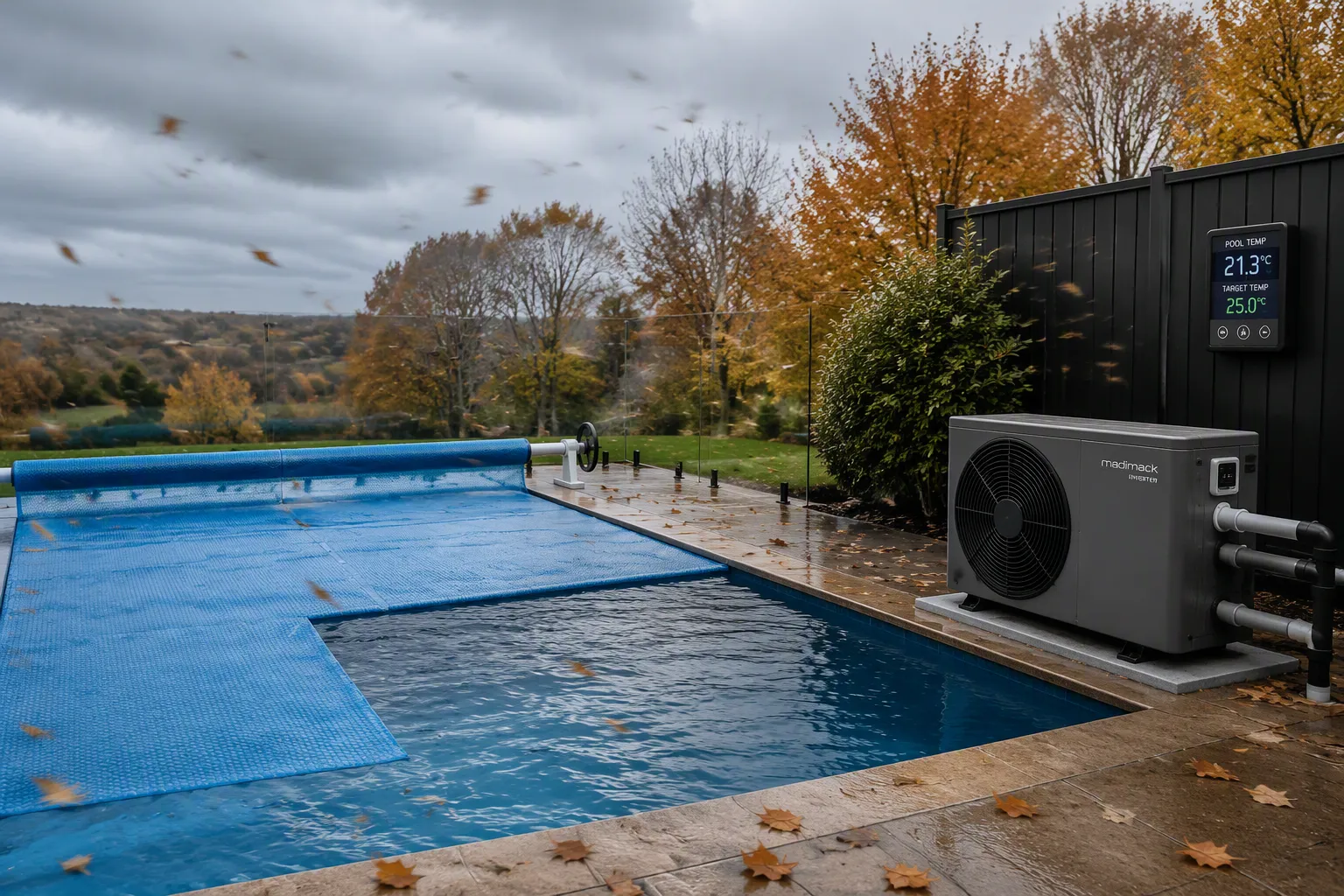
Your baseline ratio is a good start. But several environmental factors can push your final number higher. You must account for these before you pick a unit, or you may end up with a system too small to keep the water warm.
Wind and outside temperature directly affect heat pump performance. Evaporation removes heat quickly—each pound of evaporated water takes about 1,048 BTU out of the pool. So a high COP heat pump will still work poorly on an uncovered, windy pool, because wind increases heat loss. Also, COP changes with air temperature, meaning lower air temperatures reduce efficiency and require a larger unit.
Several factors determine how much heat your pool loses:
Pool surface area
Difference between average outside air temperature and pool temperature
Wind exposure
Humidity level
Cooler night-time temperatures
You can reduce some of these losses with a thermal cover. A cover cuts evaporation a lot and reduces nighttime heat loss. If you use it all the time, you can stay at the lower end of your sizing range. Without a cover, you should use the upper end. Wind, covers, and surroundings affect heat loss, so you may need a slightly larger heat pump to make up for it.
Your desired water temperature also changes your pool heating needs. Colder climates need a stronger heat pump to heat the pool well, because outside temperature is a key factor. The table below shows how target temperature affects capacity for the same pool volume.
Target Pool Temperature | Pool Volume | Required Heat Pump Capacity |
|---|---|---|
28°C | 20 m³ | 9.7 kW |
40°C | 20 m³ | 10.7 kW |
This comparison shows that for the same pool volume, raising the target temperature from 28°C to 40°C increases the needed heat pump capacity from 9.7 kW to 10.7 kW, directly showing that higher target pool temperatures need more kW per m³. You can apply this principle to your own pool heating plan. A higher target temperature means more energy input, regardless of your climate.
For climate-specific sizing, you should adjust your baseline based on your region. The climate-based BTU rule of thumb gives you a quick check: summer heating at 4 BTU per gallon, extended season at 5 BTU per gallon. Your BTU requirement based on climate tells you if you need the lower or higher end of the kW per m³ range. Cooler regions with longer swim seasons should plan for extended season heating from the start.
At SolarEast, we understand these sizing challenges from our own experience. Solareast Heat Pump Ltd. is a manufacturer of air-to-water heat pumps. We offer a variety of heat pump systems designed to meet different customer needs. Our products are built with modern technology and sustainable design, providing reliable and eco-friendly solutions that help reduce carbon footprints and improve energy efficiency. You can explore our swimming pool heat pump options, learn more about our company, or contact our team for personalized advice on your pool heating project.
Inverter technology changes how your heat pump works. Old units run at full power, then turn off completely. Inverter units change their output as needed. This matters for your energy bills and comfort.
The operation follows a simple pattern:
The pump speeds up when your pool is far from the target temperature.
It slows down as the water gets closer to the setpoint.
It keeps warmth with low, steady output once the pool reaches the desired temperature.
This method avoids constant full-power restarts. It cuts down energy waste a lot. Old units that run at full power and then shut off waste energy each time they cycle.
COP up to 14.6 gives double energy & cost savings.
This high Coefficient of Performance comes from variable speed tech. The system changes its output to match your pool's exact heating needs. You get much higher efficiency than fixed-speed heaters can offer.
Proper sizing directly affects your money. An undersized unit runs all the time. It struggles to heat the water. This extra work uses more energy and leads to early failure.
An oversized unit creates different problems. Frequent on/off cycling wears out parts faster. Efficiency drops. Lifespan gets shorter.
Oversizing impact: Frequent cycling wears components faster.
Undersizing impact: Constant running overworks the system.
Size it right. Heaters are sized to surface area and desired temperature rise; under-sizing makes it slow and inefficient.
Your heating performance gets better when you match the pump to your pool volume. You avoid wasted energy. You extend equipment life. You save money every heating season.
At SolarEast, we design our pool heat pumps with these ideas in mind. We focus on air-to-water heat pumps for homes and businesses. Our swimming pool heat pump options give reliable, eco-friendly performance. Learn more about our company or contact our team for personal sizing advice.
Solareast has many OEM pool heat pump options for homes and businesses. Our models are available in a range of heating capacities to suit different pool sizes. This covers small backyard pools and big commercial pools. Use the sizing rules from earlier to pick the right model for your pool's size. The range of outputs lets you fit any project.
All units run on single-phase 220-240V/1/50Hz power. The COP is up to 14.6. That means each kW of power gives you amazing efficiency. This high performance lowers your costs over time.
A real installation shows how our sizing works. An outdoor pool uses two parallel heat pump units to handle the heating load efficiently. This setup provides flexibility and efficiency.
This case shows why proper sizing matters. The system matches the equipment to the pool size and climate. You avoid paying too much for extra power. You also avoid a system too small that leaves you with cold water.
Solareast is a factory for OEM/ODM heat pumps. We make home, business, and industrial air-to-water heat pumps. When you use the pool heat pump sizing rules in kW per m³, our models give you reliable choices at every size. Check out our swimming pool heat pump options, learn more about our company, or contact us for advice on your pool heating project.
Follow this process to choose your pool heat pump:
Calculate your pool volume in cubic meters.
Apply the 0.31 kW/m³ baseline for summer heating.
Adjust upward for wind, cold climate, or no thermal cover.
Compare COP values; higher means better efficiency.
Professional installation ensures optimal performance.
At SolarEast, we manufacture air-to-water heat pumps. Our OEM/ODM solutions are designed for efficient performance. Explore our swimming pool heat pump options, learn about our company, or contact us for exact heat loss calculations.
An undersized pump runs all the time and still can't hit your target temperature. That wastes energy and shortens the equipment's life. Your pool stays cold on cool nights. Always match your pump output to your pool volume using the 0.31 kW per m³ baseline. Proper sizing avoids these issues.
A thermal cover cuts heat loss a lot. You can stay at the lower end of your sizing range. Without a cover, you need the upper end. Wind exposure also raises heat loss. Use the pool heat pump sizing guide to adjust for these factors.
COP stands for Coefficient of Performance. It shows how well your pump turns electricity into heat. Higher COP means lower operating costs. Inverter models reach COP values up to 14.6. Compare COP ratings when picking between different pool heat pump models. Your target temperature also affects which model works best.
Yes, but efficiency drops. A larger pump on a small pool cycles often. A smaller pump on a large pool runs constantly. Match your pump to your specific pool volume for best performance. This pool heat pump sizing example shows why accuracy matters. The total water volume determines your heating load.
Colder climates need more heating power. You should use the 0.39 kW per m³ range for extended seasons. Warmer regions can stay at 0.31 kW per m³. Your local climate determines which end of the range fits your swimming pool. This heating adjustment keeps your water comfortable year-round.
At SolarEast, we understand these sizing challenges. We manufacture air-to-water heat pumps for residential and commercial use. Our OEM/ODM solutions are designed for efficient performance. Explore our swimming pool heat pump options, learn more about our company, or contact our team for personalized sizing advice.