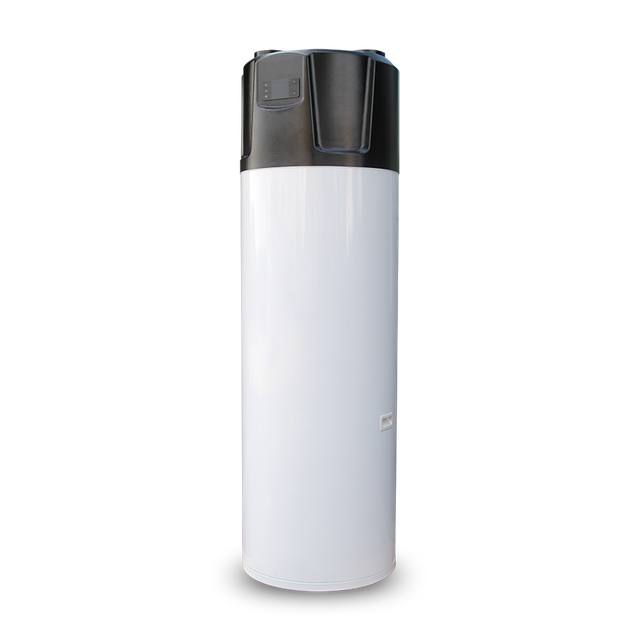
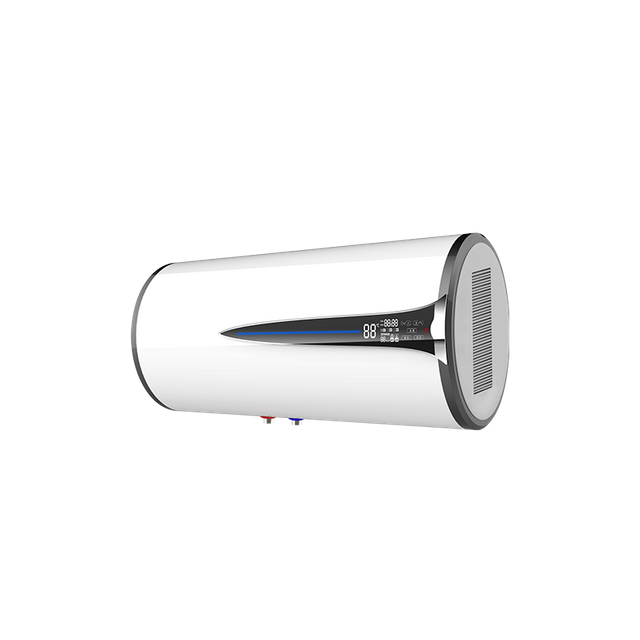
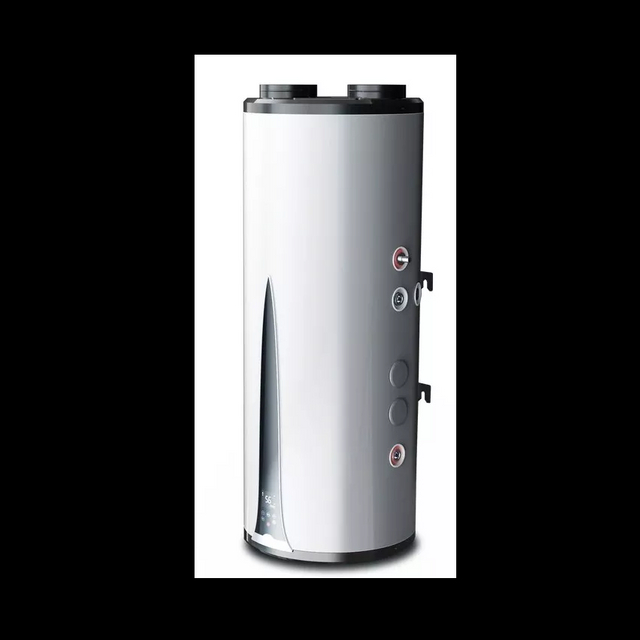
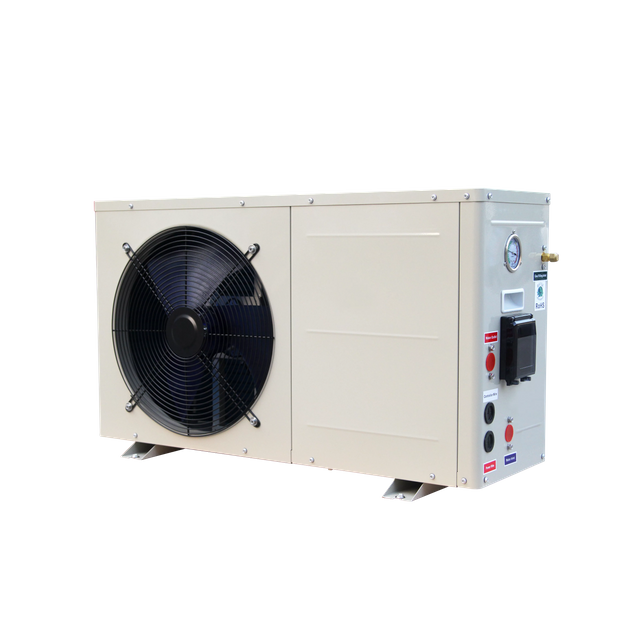
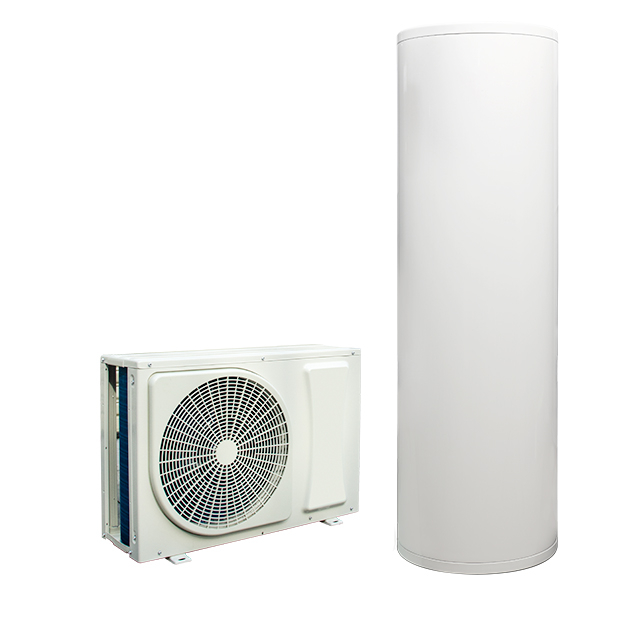
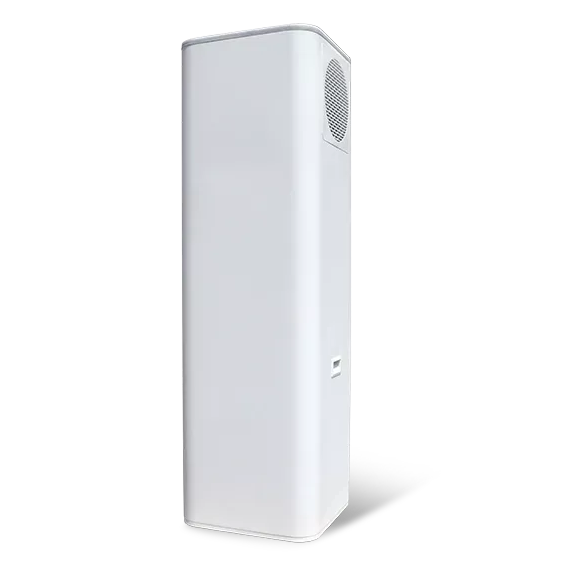
Selecting the appropriate tank for your heat pump water heater is crucial. Whether opting for an enamelled tank or a stainless steel tank, the material directly impacts heating efficiency, water quality safety, durability, and long-term maintenance costs. This article comprehensively compares enamelled tank and stainless steel tank, analysing their heating principles, advantages and limitations, ideal application scenarios, and guiding you in selecting the most suitable tank type for your heat pump water heating system.
An enamelled tank is a steel water storage tank coated internally with a high-temperature–fired glass enamel layer. This enamel coating provides excellent resistance against corrosion, high temperature, and mineral erosion.
The coating prevents water from coming into direct contact with the steel body, reducing corrosion risks in long-term hot water applications. The enamel layer typically operates safely between 60°C and 80°C, making it suitable for systems that require continuous hot water.
Typical Applications:
Enamelled tanks are commonly used in soft-water and cold-climate regions, such as Sweden, Finland, Norway, Germany, France, and Canada, where the water quality and temperature profiles support stable enamel performance.

* Enamelled Tank
An enamelled tank is a steel water storage tank coated internally with a high-temperature–fired glass enamel layer. This enamel coating provides excellent resistance against corrosion, high temperature, and mineral erosion.
The coating prevents water from coming into direct contact with the steel body, reducing corrosion risks in long-term hot water applications. The enamel layer typically operates safely between 60°C and 80°C, making it suitable for systems that require continuous hot water.
Typical Applications:
Enamelled tanks are commonly used in soft-water and cold-climate regions, such as Sweden, Finland, Norway, Germany, France, and Canada, where the water quality and temperature profiles support stable enamel performance.

* Stainless Steel Tank
The differences between Enamelled Tank and Stainless Steel Tank primarily lie in their durability, energy efficiency, water quality safety, and maintenance costs. You may wish to review the following details.
Where stainless steel tanks fail due to metallurgical defects or inadequate surface treatment, enamelled tanks continue to deliver more consistent performance.
Stainless steel tanks heat faster and experience fewer efficiency losses because they are less affected by scaling. In cold weather, stainless steel maintains heat more consistently.
Enamelled tanks accumulate scale more easily, especially when magnesium anodes are not replaced. Scale buildup creates bacteria-friendly environments, affecting water purity. Stainless steel does not need an anode and offers more stable hygiene conditions.
Enamelled tanks require magnesium anode replacement every 1–2 years, and scale removal is more frequent. Stainless steel tanks require minimal maintenance and are more stable in high-temperature and humid environments.
Enamelled tanks are heavier, and their enamel layer is fragile during transport. Stainless steel tanks are lighter and less prone to impact damage.
Stainless Steel tank and enamel are less expensive to produce than 304/316/2205 stainless steel. High-grade stainless steel significantly increases material cost.
The enamel coating process is simple and efficient, suitable for mass production. Stainless steel welding, passivation, and pressure testing take longer and require more skilled labor.

Feature | Enamelled Tank | Stainless Steel Tank |
Durability | Coating-dependent, prone to cracking | Highly durable and corrosion-resistant |
Heat Efficiency | Good insulation maintains temperature well | Excellent heat retention, better efficiency |
Cost | More affordable upfront, but maintenance is required | Higher initial cost but lower maintenance |
Maintenance | Requires careful handling to prevent enamel damage | Minimal maintenance, easy to clean |
Corrosion Resistance | Effective but prone to wear over time | Superior, especially in high-grade stainless steel |
When comparing the different types of Enamelled Tank and Stainless Steel Tank, it becomes clear that each tank category serves distinct applications depending on climate, water quality and project requirements.
Enamelled tanks is single enamel tanks, double enamel tanks and high-temperature enamel tanks,they are typically used in regions with soft water and colder climates. Their strong heat retention and cost-effectiveness make them suitable for domestic hot water and centralized heating systems, although they rely on magnesium anodes and require more frequent maintenance in hard-water environments.
On the other hand, stainless steel tanks is a 304, 316 and duplex 2205 grades, they offer significantly higher corrosion resistance and longer service life. These types of tanks are preferred in coastal areas, high-humidity regions, and markets with high mineral or chloride content in the water supply. While 304 stainless steel is ideal for neutral or soft-water regions, 316 stainless steel performs better in coastal or high-chloride environments. Duplex 2205 stainless steel provides the strongest corrosion resistance and is commonly used in large commercial projects or extreme water conditions.
Category | Type | Typical Applications | Suitable Regions | Technical Characteristics |
Enamelled Tank | Single Enamel Tank | Domestic hot water | Northern Europe, France, Canada (soft water + cold climate) | Good heat retention; low cost; prone to scaling; requires anode replacement; shorter lifespan in hard-water regions |
Double Enamel Tank | Hotels, schools, villa heating systems | Europe, Japan, Korea | Large capacity; suitable for centralized heating; coating may crack during transport; higher maintenance | |
High-Temperature Enamel Tank | 80°C high-temperature heat pumps | Sweden, Finland, Poland | Designed for high-temp systems; enamel stability needed; not recommended for hard-water regions | |
Stainless Steel Tank | 304 Stainless Steel | Household & light commercial | Japan, Germany, Switzerland, New Zealand | Cost-effective; basic corrosion resistance; not suitable for chloride/high-salt water |
316 Stainless Steel | Coastal homes, hotels, poolside facilities | Australia, California, Brazil, Southeast Asia | Strong chloride resistance; ideal for marine areas; higher cost | |
2205 Duplex Stainless Steel | Industrial systems, luxury villas | Middle East, India, South Africa | Strongest corrosion resistance; long lifespan; highest material cost |
The heating methods used in Enamelled Tank and Stainless Steel Tank vary significantly, affecting efficiency, scaling behavior, and maintenance.You may wish to review the following details.the following details.
Typical Structure: Internal enamel-coated or copper coil
How it works:
Heat pump fluid circulates inside the coil
Domestic water is stored in the tank
Heat transfers through the coil wall
Technical Features:
Large heat exchange surface
Coil exterior easily accumulates scale
Efficiency declines rapidly in hard-water regions
Requires magnesium anode protection
Best Suited Regions:
Soft-water areas in Europe
Cold-climate regions in North America
DHW systems with strict hygiene requirements
No coil
Heat pump heats the water directly
Fast heating, highest efficiency
No coil scaling issues
Best Regions: Australia, Middle East, India, tropical islands
Highly corrosion-resistant
Suitable for salt-spray and hard-water environments
Minimal maintenance
Item | Enamelled Tank (Indirect Heating) | Stainless Steel Tank (Direct + Indirect Heating) |
Primary Heating Method | Indirect Heating (Coil-in-Tank) | Direct Heating (Buffer Tank) & Indirect Heating (Internal Coil) |
Typical Structure | Internal enamelled coil or copper coil | Direct heating (no coil) OR 316/2205 stainless steel coil |
How It Works | Heat pump fluid circulates inside the coil Domestic water stored in a tank | Heat pump directly heats tank water, or transfers heat via a stainless steel coil |
Heat Transfer Efficiency | Medium greatly affected by scale buildup | High Direct heating offers the fastest output, with coil scaling. |
Scaling Behavior | Severe scaling on the coil exterior, especially in hard-water regions | Mild scaling The stainless steel surface is less prone to deposits |
Maintenance Requirements | Requires magnesium anode replacement frequent descaling needed | Low maintenance No anode required descaling minimal |
Durability Factors | Performance declines when enamel cracks or scale accumulates | Long-lasting Corrosion-resistant materials (316/2205) enhance lifespan |
Water Quality Safety | Declines with scale buildup The bacterial growth risk is higher | Stable water hygiene Stainless steel prevents contamination |
Best-Suited Regions | Soft-water areas in Europe; cold climates needing high insulation | Hard-water regions (Australia, the Middle East, India), coastal areas, and tropical climates |
Ideal Use Cases | Domestic DHW systems Residential applications | Large water demand projects Commercial & industrial use |
Key Advantages | Cost-effective Strong heat preservation | Highest efficiency Best corrosion resistance Long service life |
Key Limitations | Coil scaling Enamel cracking requires a node | Higher material cost Requires quality welding |
The lifespan of a water tank is a critical factor when selecting the right option for your hot water heat pump system. The durability of Enamelled Tank and Stainless Steel Tank depends on several variables, including water quality, temperature, and maintenance practices. In this section, we’ll compare the typical lifespan of these two types of tanks, as well as the factors that influence their longevity.
Enamelled tanks typically have a lifespan of 5–8 years, but this is heavily dependent on the environment and maintenance practices.
1) Soft Water Regions: 6–8 Years
Ideal for areas such as:
Northern Europe (Sweden, Finland, Norway)
Germany, France, Poland
Canada and parts of North America with soft water
Reason:
Low scaling rate due to soft water
Enamel coating remains stable
Mild temperature fluctuations in these areas enhance longevity
2) Hard Water Regions: 3–5 Years
Ideal for areas such as:
Australia, India, and the Middle East (high hardness water)
Southeast Asia where calcium and magnesium concentrations are high
Reason:
Rapid scale buildup on enamel coils reduces heat transfer efficiency
Enamel cracks due to increased temperature and pressure from scale buildup
Magnesium anode consumption accelerates in hard water, leading to faster corrosion if not replaced
When operating in 60°C–75°C temperature ranges, enamelled tanks are prone to:
Thermal expansion and contraction, which increases the risk of cracks
Coating damage, leading to faster corrosion once the enamel cracks
Thus, high-temperature applications such as commercial systems or industrial heat pumps are not recommended for enamelled tanks.
When comparing the typical life expectancy of Enamelled Tank and Stainless Steel Tank, Stainless Steel Tanks generally have a much longer lifespan due to their superior corrosion resistance and durability. Enamelled water tanks typically last 5-8 years, while stainless steel water tanks generally last 8-25 years.
1) 304 Stainless Steel: 8–12 Years
Suitable for regions with soft or neutral water, such as:
Germany, Switzerland, Japan, and New Zealand
Note:
304 stainless steel can be prone to pitting corrosion in high-chloride areas (e.g., coastal regions).
Lifespan shortens in hard water areas to 5–8 years.
2) 316 Stainless Steel: 12–18 Years
Suitable for areas with higher chloride content, such as:
Coastal regions (Australia, California, Brazil)
Southeast Asia, the Middle East
Advantages:
316 stainless steel contains molybdenum (Mo), significantly improving resistance to chloride-induced corrosion.
Ideal for use in marine environments and salt-heavy regions.
3) 2205 Duplex Stainless Steel: 18–25 Years
Ideal for:
Middle East (Saudi Arabia, UAE, Qatar)
India, South Africa, and regions with extremely high water hardness
Advantages:
3–4 times more corrosion-resistant than 304 stainless steel
Higher strength and pressure resistance, ideal for extreme conditions
Longest lifespan in high-salinity, high-temperature environments
Note:
2205 duplex steel is used in industrial heat pumps and large-scale commercial projects.
4) Key Factors Affecting Stainless Steel Lifespan
Welding quality (welds are vulnerable to corrosion if not properly done)
Chloride concentration in the water
Operating temperature
Regular cleaning and maintenance frequency
Unlike enamelled tanks, stainless steel tanks perform well in hard water environments with minimal scaling, resulting in a longer lifespan.
| Factor | Enamelled Tank | Stainless Steel Tank |
Typical Lifespan | 5–8 years (3–5 years in hard water) | 10–25 years (depends on material) |
Maintenance Needs | High: Requires magnesium anode & scale cleaning | Low: Minimal maintenance, no anode needed |
Water Quality Sensitivity | Very sensitive to hard water | Less sensitive, handles hard water better |
Temperature Sensitivity | High temperatures can crack enamel | Excellent performance in high-temp systems |
Suitable For | Soft water, domestic systems | Hard water, coastal, industrial use |
Long-Term Costs | Lower upfront cost but higher maintenance | Higher upfront cost but lower long-term costs |
Germany-grade enamel
Strong high-temperature resistance
Cost-effective material; ideal for large residential projects
Stable thermal performance
Smooth enamel surface reduces bacterial growth
Requires anode replacement every 1–2 years
Fragile coating prone to micro-cracks
Heavy structure; vulnerable during transport
Not suitable for hard or high-salt water
Superior water quality and safety
Excellent corrosion resistance (316 & 2205)
Long lifespan: 10–20+ years
Low maintenance
No anode needed
High mechanical strength for high-pressure environments
Higher cost (especially 316 and 2205)
304 stainless steel is not suitable for chloride-rich water
The welding process determines the lifespan
Low-grade stainless steels risk pitting corrosion
Choosing between an enamelled tank and a stainless steel tank depends on your specific needs. If you prioritize cost and efficiency, an enamelled tank is a great choice. However, if durability, heat efficiency, and low maintenance are essential, a stainless steel tank—especially 2205 stainless steel—is the best option.

Enamelled Tanks → Best for soft-water regions and cold climates (Northern Europe, North America).
Stainless Steel Tanks → Best for hard-water, coastal, or high-corrosion regions (Australia, Middle East, India).
Choosing the right tank type ensures performance, safety, and long-term durability for your Hot Water Heat Pump system.
Selecting the right supplier ensures long-term reliability.
Look for suppliers offering multiple choices:
Refrigerants: R290, R134a, R410A
Airflow direction: Top discharge/side discharge
Installation: Wall-mounted / floor-standing
Shape: Cylindrical/rectangular
Structure: Monobloc / split systems
A supplier with full production capability ensures stable quality, traceability, and predictable delivery times.
A professional supplier should offer enamelled, 304, 316, and 2205 tank options for different water qualities.
Fast response, spare parts availability, and technical support are essential for long-term cooperation.
Ensure their manufacturing capacity can meet urgent orders or large project demands.

Solareast provides high-performance enamelled tanks, ideal for residential and commercial applications. With advanced Enamelled Tank Liners, these tanks offer superior corrosion resistance and thermal efficiency, ensuring long-term reliability.
Unlike standard 304 Stainless Steel Water Tanks, Solareast’s 2205 stainless steel tanks offer twice the strength and superior resistance to corrosion. This makes them the best choice for industrial and high-temperature water heating applications.
Reliable enamelled & stainless steel tanks for various applications
2205-grade stainless steel, exceeding industry standards
Compatible with heat pump & solar water heating systems
OEM/ODM customization available
Looking for the best enamelled or stainless steel tank for your water heater? Contact Solareast today for customized solutions!
Stainless steel tanks, especially 2205-grade, last significantly longer due to superior corrosion resistance.
Yes, enamelled tanks are more affordable upfront, but they require more maintenance.
No, safety stainless steel tanks ensure that no contaminants leach into the water, preserving its purity.
For residential use, enamelled tanks are a cost-effective choice. For commercial applications, 2205 stainless steel tanks provide maximum durability and efficiency.
For further reading on water heating technology and materials, check out: