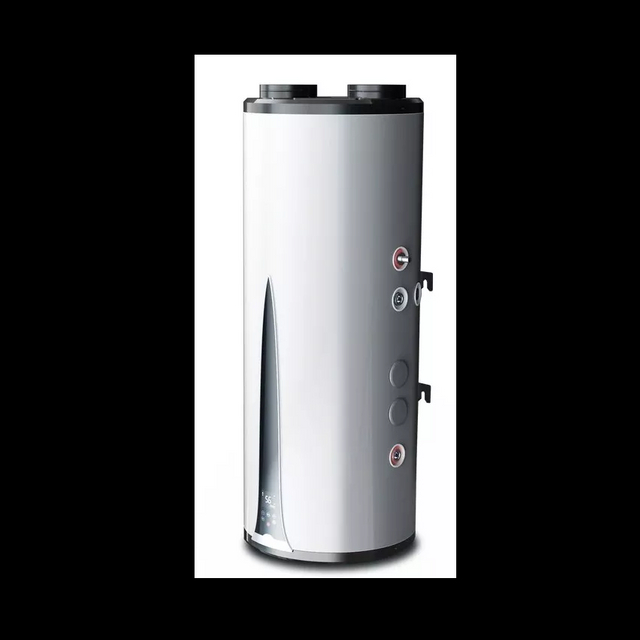
Heat pumps help heat and cool homes. Many people want to find the best heat pump brands to lower energy costs. This blog looks at the top heat pump manufacturers in 2025. It also covers residential heat pump manufacturers and commercial heat pump suppliers. We explain how these heat pump suppliers stand out. We also list tips on choosing the right heat pump manufacturer for you. By the end, you will know about air source heat pump manufacturers and industrial heat pump manufacturers. We will see how each works as a heat pump system provider and how to pick the best for your needs.
Here is our list of the top 10 heat pump manufacturers.
Mitsubishi Electric
Daikin
Solareast
Carrier
Trane
Bosch
Lennox
Fujitsu
Panasonic
NIBE
The above is a comprehensive comparison of the top 10 air source heat pump manufacturers. We are based on company history, environmental commitment, expertise, operating temperature capability, product strengths, and suitable application regions.
Headquarters: Tokyo, Japan
Environmental Commitment: Drives the “Environmental Sustainability Vision 2050,” focusing on energy efficiency and low-carbon manufacturing
Business Scope: HVAC, automation, semiconductors, elevators, power systems; heat pumps are one of its core product lines.
Operating Temperature: Stable heating performance down to –25°C to –28°C, with domestic hot water temperatures over 55°C.
Key Strengths: Long-proven compressor technology, ultra-quiet operation, and strong reliability in cold climates.
Suitable Regions: Northern Europe, the UK, Germany, Japan, and Australia.
Mitsubishi Electric makes pump systems for many needs. Their air source heat pump units help customers heat and cool homes more efficiently. They use smart inverter technology to reduce costs.
Founded: 1918
Headquarters: Osaka, Japan
Environmental Commitment: Implements “Panasonic GREEN IMPACT,” focusing on energy saving and emission reduction.
Business Scope: Home appliances, HVAC, air-quality systems, and residential heat pumps.
Operating Temperature: Performs well at –20°C to –25°C, with hot water temperatures above 60°C.
Key Strengths: User-friendly interface, durable components, strong presence in residential markets.
Suitable Regions: Europe, especially France, Spain, and Eastern Europe.

Founded: 1999 (Group), over 10 years dedicated to heat pump R&D and manufacturing
Headquarters: Jiangsu, China
Environmental Commitment: Active promoter of R290 low-GWP heat pumps, operating a solar-powered zero-carbon laboratory and TÜV-certified R290 production lines.
Business Scope: Air-to-water heat pumps for heating, DHW, and pools; commercial heat pumps; strong OEM/ODM focus.
Operating Temperature: R290 monobloc systems operate down to -30 to -25°C. The Ultra series can operate down to -30°C. Hot water temperatures up to 80°C, depending on the model.
Key Strengths: CNAS-accredited testing labs, full-range production capability, and stable air source heat pump supply chain reliability for global OEM partners.
Suitable Regions: Europe, the UK, Australia, America, the Middle East, and Asia, especially for B2B distributors and brand owners.
Solareast is one of the heat pump manufacturers in China. They produce environmentally friendly residential and commercial heat pump solutions. Their products focus on saving energy and lowering emissions.

Founded: 1902
Headquarters: Florida, USA
Environmental Commitment: Advocates “Healthy, Safe, Sustainable Buildings,” investing in low-emission HVAC solutions.
Business Scope: Commercial HVAC, cold chain systems, residential heating and cooling.
Operating Temperature: Reliable performance at –20°C, with hot water temperatures up to 65°C.
Key Strengths: Strong commercial engineering capability and robust system integration.
Suitable Regions: North America, Europe, Australia.
Carrier makes heating and cooling system products for many climates. Its best heat pump brands stand out for strong performance. Their highly efficient heat pumps are built to lower energy use year-round.

Founded: 1913
Headquarters: Ireland / United States
Environmental Commitment: Implements the “Gigaton Challenge” aimed at reducing global HVAC carbon emissions.
Business Scope: Commercial HVAC systems, air handling units, chillers, and heat pumps.
Operating Temperature: Most models operate at –20°C, with hot water up to 65°C.
Key Strengths: Exceptional commercial reliability and system durability.
Suitable Regions: Europe and North America, particularly commercial buildings and industrial sites.
Trane focuses on durable HVAC system solutions. Many commercial heat pump suppliers rely on Trane for large buildings. Their products keep fossil fuel usage low and maintain stable temperatures in all seasons.
Founded: 1886
Headquarters: Stuttgart, Germany
Environmental Commitment: Operates carbon-neutral manufacturing plants and invests in low-emission heating technologies.
Business Scope: Heating systems, boilers, heat pumps, and water heaters.
Operating Temperature: Works efficiently at –20°C to –25°C, with supply water up to 65°C.
Key Strengths: High durability, strong reputation in residential heating, integrated heating-and-DHW systems.
Suitable Regions: Germany, Central Europe, and the UK.
Bosch is known for residential heat pump manufacturers and air source heat pump designs. They offer environmentally friendly refrigerants. Bosch provides efficient heating and cooling for both homes and offices.

Founded: 1895
Headquarters: Texas, USA
Environmental Commitment: Focuses on CO₂ reduction and recyclable materials in HVAC production.
Business Scope: Residential HVAC, commercial air conditioning, heat pumps for North America.
Operating Temperature: Reliable performance down to –15°C to –20°C.
Key Strengths: Strong presence in the U.S. residential retrofit market.
Suitable Regions: United States and Canada.
Lennox is a heat pump system provider that is strong in technology. They design highly efficient systems to heat and cool homes while lowering carbon footprints. Lennox products also have good warranties.

Founded: 1936
Headquarters: Kawasaki, Japan
Environmental Commitment: Publishes ongoing sustainability reports covering energy reduction and eco-design.
Business Scope: Residential AC, VRF, multi-splits, and air-to-water heat pumps.
Operating Temperature: Efficient operation down to –20°C to –25°C.
Key Strengths: Excellent noise control, high energy efficiency, reliable winter performance.
Suitable Regions: Japan, Europe, and Australia.
Fujitsu is popular for compact air conditioners and pump systems. Their air source heat pump manufacturers' approach helps small or large homes. Fujitsu aims for easy installations and lower energy costs.

Founded: 1918
Headquarters: Osaka, Japan
Environmental Commitment: Implements “Panasonic GREEN IMPACT,” focusing on energy saving and emission reduction.
Business Scope: Home appliances, HVAC, air-quality systems, and residential heat pumps.
Operating Temperature: Performs well at –20°C to –25°C, with hot water temperatures above 60°C.
Key Strengths: User-friendly interface, durable components, strong presence in residential markets.
Suitable Regions: Europe, especially France, Spain, and Eastern Europe.
Panasonic delivers highly efficient heating and cooling solutions. They feature smart controls to keep rooms comfortable. Panasonic is known for eco-friendly refrigerants that reduce impact on the ozone layer.
Founded: 1952
Headquarters: Markaryd, Sweden
Environmental Commitment: Deeply involved in Nordic carbon-neutral initiatives and renewable-energy technologies.
Business Scope: Air-source heat pumps, ground-source heat pumps, and residential heating systems.
Operating Temperature: Engineered for cold climates, with stable heating down to –25°C to –30°C.
Key Strengths: Outstanding cold-climate performance and high reliability.
Suitable Regions: Sweden, Finland, Norway, Germany.
NIBE focuses on industrial heat pump manufacturers as well as home systems. They use source heat pump designs for ground or air. NIBE’s solutions keep a higher temperature stable, even in cold climates.

When selecting an air-source heat pump manufacturer for collaboration, the following factors should be evaluated to ensure stable business development and long-term market competitiveness:
A trustworthy manufacturer must hold certifications that match the target market, such as: MCS, KEYMARK, ErP, CE, WaterMark / RCM , AHRI / DOE
Supply chain reliability is a critical indicator of whether a manufacturer can support long-term cooperation. Key evaluation points include:
Stability of core component suppliers
Safety stock and multi-warehouse logistics capability
Consistency of the delivery schedule during peak seasons
Flexibility in handling urgent or seasonal demand
A stable supply chain ensures predictable delivery, reduces market risks, and strengthens downstream competitiveness.
Financial capability is an essential but often overlooked factor in selecting a manufacturer. Heat pump production requires continuous investment in automated lines, testing laboratories, and R&D.
Manufacturers with solid financial strength can:
Sustain long-term technology upgrades
Support large-volume or cross-season production schedules
Manage raw material price fluctuations
Provide safer and more stable long-term cooperation
A weak financial structure increases risks of delays, limited inventory, or inconsistent product quality.
Laboratory facilities are the core foundation of a manufacturer’s product reliability. A mature heat pump manufacturer should operate:
Full-standard EN14511/EN14825 test chambers
R290 explosion-proof rooms and safety validation setups
CNAS-level reliability testing capabilities
Long-term ageing, noise, and corrosion tests
Strong lab capability directly improves performance consistency, especially for OEM/ODM projects requiring repeated validation.
Different markets require different operating conditions, especially in colder regions. It is essential to examine:
Whether the heat pump can operate reliably at –20°C to –30°C
Maximum outlet water temperature for residential heating or commercial DHW
Seasonal performance (SCOP) requirements for local subsidies
These indicators determine whether the product is truly suitable for the target climate and application.
R&D strength reflects a manufacturer’s ability to adapt to regulatory changes and technology trends. Key considerations include:
Transition capability from R410A → R32 → R290
Compliance with the latest F-gas regulations
Energy efficiency improvements (e.g., A+++ class)
System integration across heating, cooling, DHW, and pool applications
Manufacturers with weak R&D capability often fail to keep up with evolving international requirements.
For distributors, project developers, and brand owners, OEM/ODM flexibility has become a critical factor. Assess whether the manufacturer can provide:
Customizable control logic and software
White-label apps and Wi-Fi interfaces
Flexible enclosure, color, or structural customization
Fast sample delivery and engineering adaptation
Complete technical documentation and training
OEM/ODM capability determines how well the manufacturer supports your market positioning.
Pricing is not the only deciding factor, but it shapes profit strategy and market competitiveness. A reliable manufacturer should offer:
Stable long-term price structure
Tiered or project-based pricing
Transparent and predictable material-cost management
Manufacturers with volatile pricing often reflect weak cost control or limited supply chain stability.
A comprehensive support system directly impacts customer satisfaction and brand reputation. Key items include:
Remote diagnostic and commissioning support
Spare parts availability
Technical training (online/offline)
Standardized after-sales process and documents
This dimension determines whether the manufacturer can support your long-term market expansion.
Conducting a structured Air Source Heat Pump Manufacturer Comparison is essential before selecting long-term partners. Different air source heat pump manufacturers vary significantly in technical direction, supply chain strength, market positioning, and OEM/ODM flexibility. A systematic comparison helps distributors, installers, and project developers determine which manufacturer aligns best with their target market and long-term business strategy.
Below is a consolidated analysis of the key differences among leading global manufacturers.
Japanese Stability, European Standardization, Chinese Flexibility
Known for reliability, refined control logic, and excellent low-noise performance. Their model updates tend to be conservative, making them ideal for residential users prioritizing long-term durability and stable operation.
Focus heavily on EN standards and region-specific regulations. Their systems are structurally robust and suitable for high-standard residential and commercial installations, though they typically offer limited customization.
Feature broader product portfolios and significantly stronger OEM/ODM flexibility. They offer complete lines for heating, hot water, pools, and commercial applications, with rapid R290 product iteration.
Ideal for distributors and private-label brands seeking scalable growth and product personalization.
2. Performance Differences
Operating temperature capabilities vary widely:
Most European and Japanese models operate reliably between –20°C and –25°C.
Nordic manufacturers (e.g., NIBE) excel in extreme cold regions near –30°C.
Some Asian manufacturers deliver stronger high-temperature DHW performance (75–80°C), exemplified by Solareast’s R290 lineup.
Evaluation should consider:
Heating curve behavior
Seasonal performance (SCOP)
Maximum water outlet temperature
Low-ambient performance degradation
These technical factors determine a heat pump’s suitability for different countries and climate zones.
European and Japanese brands typically rely on fixed supply chains—high stability but slow expansion and longer lead times during peak seasons.
Chinese manufacturers benefit from stronger scalability, flexible production scheduling, and shorter delivery cycles, making them ideal for fast-growing or high-volume markets.
Supply chain reliability directly affects market continuity, making it a core factor in choosing a manufacturer.
European brands: higher pricing, positioned for high-standard residential or commercial markets.
Japanese brands: stable pricing with a focus on durability.
Chinese manufacturers: cost-efficient, suitable for channel expansion and private-label growth.
In OEM/ODM scenarios, molding cost, software customization cost, and sample lead time also vary significantly across manufacturers.
European and Japanese manufacturers offer standardized products and limited OEM acceptance.
Chinese manufacturers provide flexible and mature ODM capabilities:
custom housings and colors
UI/software interface customization
branded apps
structural modifications
engineering/testing support
For brands developing their own product identity, ODM flexibility is a decisive advantage.
International brands have established local service networks, though response times vary by region.
Chinese manufacturers often rely on remote commissioning, technical documentation, and online training—fast and efficient, but requiring distributor cooperation for on-site support.
Service capability impacts not only after-sales experience but also long-term partnership sustainability.
A structured Air Source Heat Pump Manufacturer Comparison typically leads to the following conclusions:
Extreme cold climates → Nordic brands (NIBE)
Low noise & long-term stability → Japanese brands
Faster delivery, broader product lines, strong OEM/ODM → Chinese manufacturers
Commercial projects & large buildings → European/North American brands (Trane, Carrier)
Final selection should align with your:
Target market
User profile
Distribution strategy
The factors for selecting a Heat Pump Manufacturer are discussed above.
Below is the English translation of your technical comparison, fully polished and industry-appropriate.
| Brand | Flagship Model | ErP | COP | Noise | Max Water Temperature |
Mitsubishi Electric | Ecodan | A+++ | 4.2–4.8 | 41–52 | 55–60°C |
Daikin | Altherma 3 | A+++ | 4.45–5.1 | 35–48 | 60°C |
Solareast | R290 Monobloc | A+++ | COP 4.6–4.9 | 35–48 | 75–80°C |
Carrier | AquaSnap | A+ ~ A++ | 3.8–4.2 | 55–65 | 60°C |
Trane | CXWF / XR | A++ | 3.6–4.2 | 55–68 | 65°C |
Bosch | Compress 7000i AW | A+++ | 4.5–5.0 | 39–52 | 62–65°C |
Lennox | XP25 / ML17XP1 | N/A(AHRI) | 3.0–3.6 | 60–75 | ~55°C |
Fujitsu General | Waterstage | A+++ | 4.3–4.8 | 45–52 | 55–60°C |
Panasonic | Aquarea T-CAP | A+++ | 4.6–5.1 | 35–48 | 60–65°C |
NIBE | F2120 | A+++ | 4.5–5.2 | 40–56 | 65°C |
* Heating Performance Comparison of the Top 10 Manufacturers
You can follow our recommendations to choose the right air source heat pump manufacturers, or consider actors for selecting a heat Pump manufacturer. It‘s key to ensuring long-term efficiency and reliability in heating solutions. By considering factors such as performance, energy efficiency, supply chain reliability, and OEM/ODM flexibility, you can make an informed decision. Whether you prioritize low-temperature performance or cost-effective solutions, understanding these key elements will help you select the best manufacturer for your specific needs. For a detailed comparison, visit our full guide on the Top 10 Air Source Heat Pump Manufacturers of 2025 here.